
Business compliance management in India requires adhering to evolving statutory, tax, and labor regulations to avoid penalties and operational disruptions. Effective compliance management helps businesses meet legal obligations efficiently, with firms like Vaurus providing end-to-end compliance management services. By leveraging professional support and automation, companies can transform these ongoing regulatory burdens into a secure and streamlined corporate function.
India’s regulatory environment is dynamic, with frequent updates in labor codes, GST rules, and digital privacy laws. Businesses must navigate central and state-level requirements, making compliance management a continuous responsibility rather than a one-time task. Implementing the right compliance management solutions enables organizations to stay compliant, reduce risks, and improve operational efficiency while adapting to changing regulations.
What Is Business Compliance Management?
Compliance management involves systematically identifying, monitoring, and fulfilling all regulatory obligations. It includes tracking deadlines, maintaining records, filing returns, and implementing internal controls to meet legal standards. Effective compliance management helps businesses stay proactive amid evolving rules like the four new labor codes and the Digital Personal Data Protection (DPDP) Act.
Modern compliance management solutions use technology such as automation, dashboards, and alerts to simplify these processes. These tools reduce manual errors and provide real-time visibility into compliance status.
Why Compliance Management Is Important for Every Company
Compliance management is vital because non-compliance can lead to severe consequences. Penalties for late filings under the Companies Act can reach lakhs of rupees, with additional daily fines. Directors may face personal liability, including imprisonment in serious cases. Beyond fines, businesses risk operational shutdowns, loss of investor trust, and reputational harm. Provident Fund (PF) expenses are disallowed and added to your taxable income if the employee’s contribution is not deposited by the statutory due date under the PF Act, or if the employer’s contribution is not paid before the Income Tax Return filing deadline.This leads to increased tax liability.
Key reasons why it matters:
- Risk Mitigation: Avoids hefty penalties and legal actions. For instance, EPF violations attract interest and damages up to 12% annually. This means that Interest goes upto 12% and damages range from 5% to 25% per annum on the arrear amount.
- Business Continuity: Ensures smooth operations and access to government incentives or funding.
- Reputation and Trust: Compliant companies attract better talent, partners, and customers.
- Strategic Advantage: Frees up resources for growth instead of firefighting regulatory issues.
The India governance, risk, and compliance market reflects this importance, growing rapidly due to increasing regulatory complexity.
Key Areas of Business Compliance in India
Businesses typically manage several core compliance categories:
- Corporate and Secretarial: Annual filings with the Ministry of Corporate Affairs (MCA), board meetings, and director responsibilities under the Companies Act 2013.
- Taxation: GST registration and returns (GSTR-1, GSTR-3B), Income Tax returns, and TDS/TCS compliance.
- Labor and HR: Provident Fund (PF) for 20+ employees, Employees’ State Insurance (ESI) for 10+ employees,, minimum wages, and new labor codes on wages, social security, and industrial relations.
- Data Protection and Others: DPDP Act compliance, environmental clearances, and sector-specific licenses.
How Does Compliance Management Work?
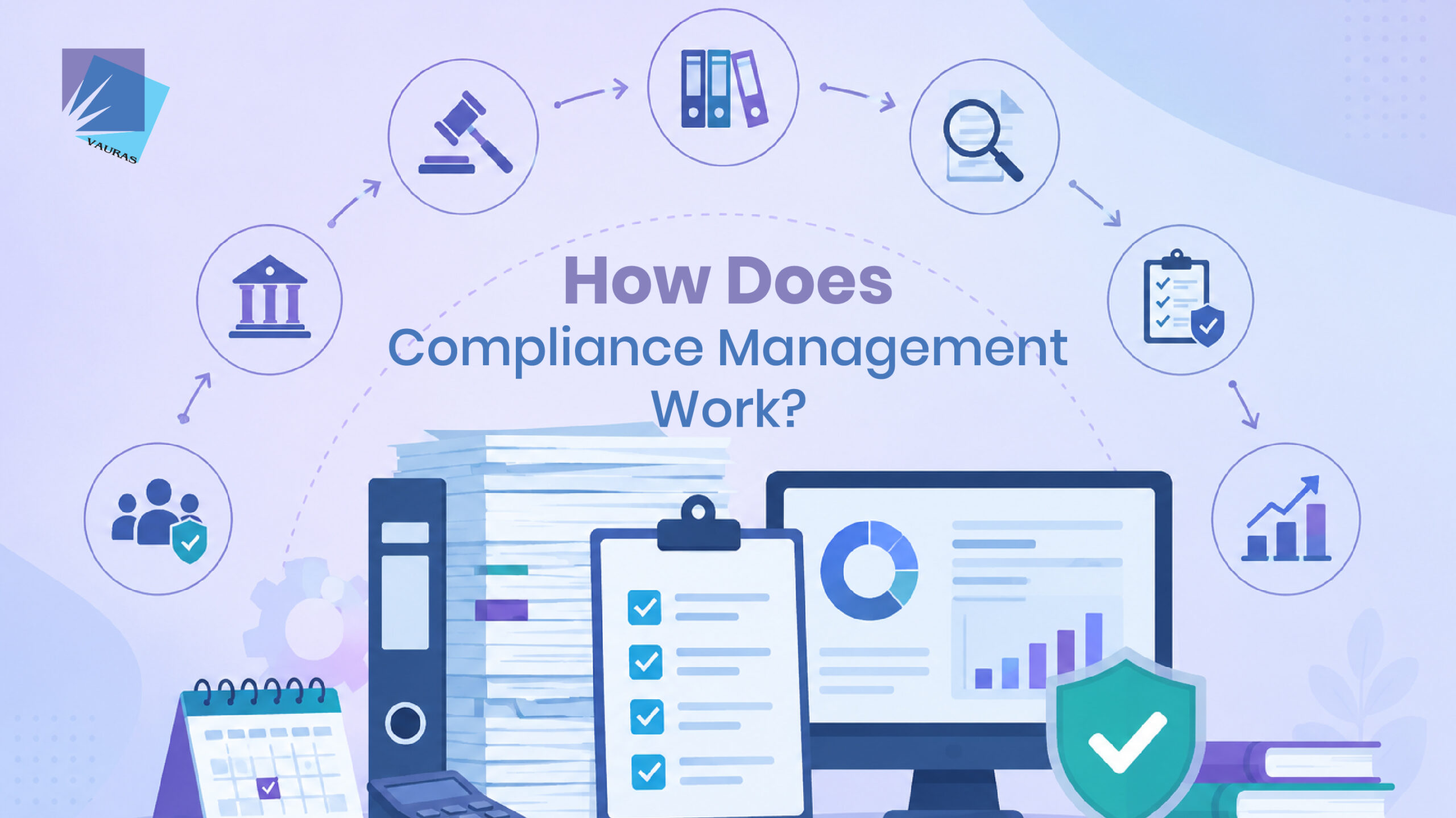
Effective compliance follows a structured cycle:
- Identification: Map all applicable laws based on company size, industry, and location.
- Implementation: Set up policies, train staff, and integrate tools for tracking.
- Monitoring and Reporting: Use automated systems for reminders and filings.
- Review and Audit: Conduct regular internal checks and adapt to new regulations.
Compliance management services provide expert support for these steps, especially beneficial for SMEs that lack dedicated teams.
Benefits of Professional Compliance Management Solutions
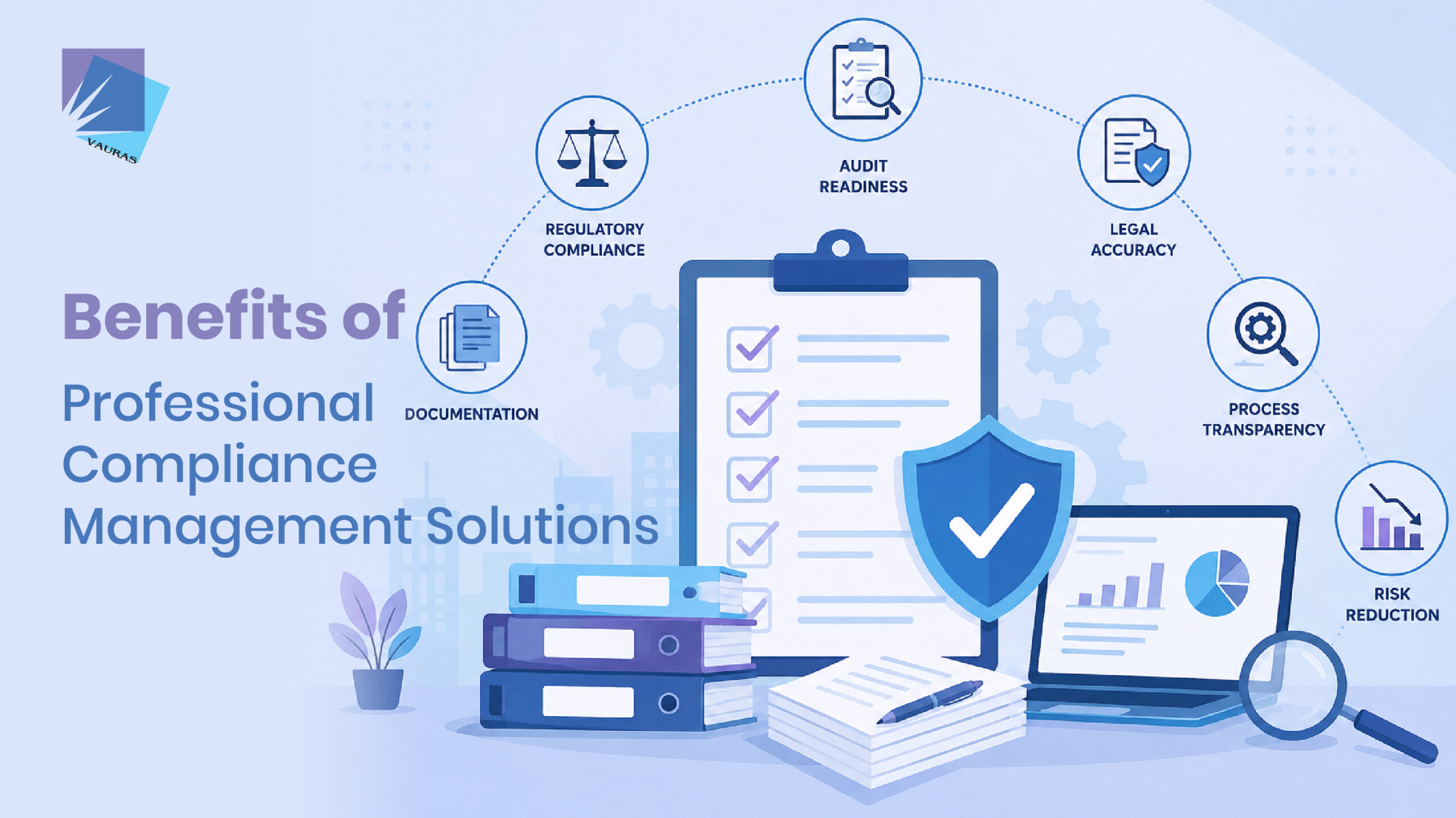
Adopting robust compliance management solutions delivers clear advantages:
- Accuracy and Timeliness: Automation minimizes errors in calculations and filings.
- Cost Efficiency: Reduces penalties and the need for large in-house teams.
- Scalability: Easily handles growth or expansion across states.
- Peace of Mind: Experts stay updated on changes, such as 2025 ESG and data privacy updates and and 2025 social security codes or wage codes..
Businesses using compliance management services often report higher efficiency and lower stress during audits or inspections.How to Implement
Effective Compliance Management
Start with these practical steps:
- Conduct a compliance audit to identify gaps.
- Choose suitable compliance management services or software tailored to your needs.
- Train employees and assign clear responsibilities.
- Schedule regular reviews and stay informed through reliable sources.
Transitioning to professional support allows internal teams to focus on core business activities while ensuring nothing falls through the cracks.
Frequently Asked Questions
1. What are the most common compliance challenges for Indian businesses?
Frequent regulatory changes, complex multi-state rules, and resource constraints often lead to missed deadlines. Professional solutions help overcome these hurdles effectively.
2. Is compliance management only for large companies?
No. Small and medium enterprises also face significant risks from non-compliance. Early adoption of compliance management protects them and supports sustainable growth.
3. How can technology help with compliance?
Compliance management solutions offer automation, real-time alerts, and centralized dashboards that simplify tracking and reporting across multiple regulations.
In today’s competitive landscape, strong compliance practices are no longer optional, they form the foundation for trustworthy, resilient, and successful businesses in India. By prioritizing compliance management services and leveraging modern solutions, companies can turn regulatory requirements into opportunities for efficiency and long-term growth.

Aditya Choukhany
Aditya Choukhany is the Founder and Director of Vauras, specializing in payroll management, HR solutions, and statutory compliance. He shares expert insights on payroll processing, EPF, ESIC, labour laws, HR technology, and business automation for Indian businesses.