
India’s four New Labour Codes consolidate 29 central labour laws into the Code on Wages, Industrial Relations Code, Code on Social Security and Occupational Safety, Health and Working Conditions Code. They have been effective since 21 November 2025. In 2026, employers should review wages, payroll, social security, workplace policies, records, registrations, worker relations and safety obligations against the Codes and applicable Central or State rules.
India’s New Labour Codes Are No Longer a Future Compliance Issue
For several years, businesses in India discussed the new Labour Codes as something they would eventually need to prepare for.
That period is over.
The Government of India made the four Labour Codes effective from 21 November 2025. Together, they consolidate and rationalise 29 central labour laws covering wages, industrial relations, social security and occupational safety.
The compliance framework also moved forward significantly in 2026. Central Rules under the Code on Wages, Industrial Relations Code, Code on Social Security and Occupational Safety, Health and Working Conditions Code were notified in May 2026.
For employers, this means the question is no longer:
“When will the new Labour Codes come?”
The more useful question is:
“What does our organisation need to change to comply with the New Labour Codes in 2026?”
This guide provides a practical starting point.
Key Takeaways for Employers
- India’s four Labour Codes have been effective since 21 November 2025.
- The four Codes consolidate 29 central labour laws into four broader frameworks.
- The Ministry’s Employer Compliance Handbook says the framework reduces multiple registrations, returns, forms and registers.
- The definition of wages now requires employers to review salary components and the 50% allowance rule carefully.
- The 50% rule does not simply mean “basic salary must equal 50% of CTC.”
- Wage-payment timelines, exit settlements, wage slips and authorised deductions require stronger payroll controls.
- Employers may need new or updated processes around appointment letters, workplace safety, grievance committees, standing orders, contract labour and social-security coverage.
- PF, ESIC, gratuity and maternity compliance sit within the broader Social Security Code framework.
- Multi-state employers must still account for the appropriate government, State rules and State-specific obligations.
- Employers should approach Labour Code implementation as a cross-functional project involving HR, payroll, finance, compliance, legal and operations.
What Are the Four New Labour Codes in India?
India’s Labour Code framework has four main components:
|
Labour Code |
Main Area Covered |
Key Employer Functions Affected |
|
Code on Wages, 2019 |
Wages, minimum wages, payment of wages, bonus and equal remuneration |
Payroll, salary structures, overtime, deductions, wage slips |
|
Industrial Relations Code, 2020 |
Trade unions, industrial disputes, standing orders, retrenchment and worker relations |
HR policies, employee relations, grievance handling, restructuring |
|
Code on Social Security, 2020 |
PF, ESIC, gratuity, maternity, employee compensation and other social security |
Payroll, benefits, PF/ESI, exits, workforce classification |
|
Occupational Safety, Health and Working Conditions Code, 2020 |
Workplace safety, health, working conditions, contract labour and migrant workers |
HR, EHS, operations, contractors, facilities |
The Ministry’s Employer Compliance Handbook says the reforms reduced 1,228 statutory sections to 480 and reduced the number of draft rules from 1,436 to 351. It also describes movement from 31 returns toward a single electronic return, 181 forms to 73 and 84 registers to eight.
This simplification does not mean employers have fewer responsibilities in every situation.
It means compliance is being reorganised into a more consolidated framework.
What Changed for Employers in 2026?
2026 is important for three reasons.
1. The Labour Codes Are Operational
The Codes took effect on 21 November 2025. Employers therefore need to assess current policies and practices against the new framework rather than treating the reform as a future event.
2. Central Rules Were Notified
The Code on Wages (Central) Rules, Industrial Relations (Central) Rules, Social Security (Central) Rules and Occupational Safety, Health and Working Conditions (Central) Rules were notified in May 2026.
This gives employers in the Central Government sphere more detailed procedural guidance.
3. Salary and HR Processes Need Operational Changes
Several Labour Code requirements cannot be solved by updating one policy document.
They can affect:
Salary structure
→ Payroll calculations
→ Appointment letters
→ Attendance
→ Overtime
→ PF and ESIC
→ Gratuity
→ Employee exits
→ Contract labour
→ Grievance handling
→ Safety records
→ Registers and returns
This is why employers should treat Labour Code readiness as an operating-model change.
Do the New Labour Codes Apply to Every Employer in the Same Way?
No.
This is one of the most important points for businesses to understand.
Applicability can depend on factors such as:
- Nature of establishment
- Number of employees
- Number of workers
- Industry
- State
- Location
- Use of contract labour
- Presence of inter-state migrant workers
- Whether the Central or State Government is the appropriate government
- Employee or worker classification
- Specific thresholds under each Code
The Ministry’s Employer Handbook itself states that it primarily covers establishments for which the Central Government is the appropriate government.
Businesses should therefore avoid copying a generic Labour Code checklist without first determining which Central and State requirements apply to them.
A Practical Labour Code Compliance Process
Employers can manage the transition through the following process:
Step 1: Identify establishments and locations
↓
Step 2: Determine the appropriate government
↓
Step 3: Map applicable Codes and thresholds
↓
Step 4: Review salary and wage structures
↓
Step 5: Review PF, ESIC, gratuity and benefits
↓
Step 6: Update HR policies and appointment documentation
↓
Step 7: Review industrial-relations requirements
↓
Step 8: Check contractor and migrant-worker compliance
↓
Step 9: Review workplace safety obligations
↓
Step 10: Update registers, returns and compliance calendars
↓
Step 11: Train HR, payroll and managers
↓
Step 12: Conduct a Labour Code compliance audit
Let us examine each Labour Code separately.
1. Code on Wages, 2019: What Employers Need to Review
The Code on Wages has one of the most immediate impacts because almost every organisation processes employee wages.
It covers areas such as:
- Minimum wages
- Definition of wages
- Timely payment
- Wage periods
- Deductions
- Overtime
- Bonus
- Equal remuneration
- Wage registers
- Wage slips
The Ministry’s Employer Handbook states that the Code extends minimum-wage protection broadly and requires employers to follow the wage rates notified by the appropriate government.
Understanding the New Definition of Wages
One of the most discussed changes is the definition of wages.
The Labour Ministry explains that wages include:
- Basic pay
- Dearness allowance
- Retaining allowance, where applicable
Certain other items can be excluded.
However, where the specified excluded components exceed 50% of total remuneration, the excess is added back into wages.
This creates an important compliance test for salary structures.
Simple Example
Assume an employee’s remuneration is ₹100,000.
If components treated as excluded allowances total ₹60,000, the permitted 50% level would be ₹50,000.
The excess ₹10,000 may therefore need to be added back when determining wages under the statutory definition.
The actual treatment depends on the nature of each component.
Employers should not apply this as a simple mathematical rule without first classifying the salary components correctly.
Does the New Wage Code Make Basic Salary 50% of CTC Mandatory?
Not exactly.
This is an important distinction.
A common statement online is:
“Basic salary must be 50% of CTC.”
That is an oversimplification.
The statutory framework works through the definition of wages and the treatment of excluded components. If specified exclusions exceed 50% of remuneration, the excess is added back to wages.
The Labour Ministry’s additional FAQs also provide clarification on items such as overtime, employer PF/pension contributions, gratuity and ESI when determining remuneration for the 50% test.
Therefore, employers should review each salary component rather than simply changing basic salary to exactly 50% of CTC.
2026 Wage Structure Review Checklist
Employers should check:
- Basic pay
- Dearness allowance
- Retaining allowance
- HRA
- Conveyance-related components
- Overtime
- Commissions
- Performance incentives
- Employer PF or pension components
- Statutory bonus
- Reimbursements
- Gratuity
- Other retirement benefits
- Variable pay
The objective is to understand how the statutory wage definition affects payroll, PF, gratuity, bonus and other calculations.
Wage Payment Timelines Employers Should Know
The Employer Compliance Handbook lists the following wage-payment timelines:
| Wage Period | Payment Timeline |
| Daily | At the end of the day |
| Weekly | Last working day of the week |
| Fortnightly | Before the end of the second day after the fortnight |
| Monthly | Before expiry of the seventh day of the succeeding month |
Employers may pay earlier according to company policy.
The statutory timeline should be treated as a maximum compliance boundary, not necessarily the ideal payroll date.
What Happens When an Employee Leaves?
The Code on Wages creates an important payroll and HR control around employee exits.
The Ministry’s Employer Handbook states that due wages following resignation, dismissal or termination must generally be paid within two working days.
This makes delayed exit information a significant compliance risk.
HR, payroll, finance, IT and the employee’s reporting manager should therefore operate through a coordinated exit process.
Employers Must Control Wage Deductions
Payroll teams cannot make arbitrary deductions.
The Ministry’s Handbook states that deductions must fall within authorised categories and that total deductions should not exceed 50% of wages for the wage period.
Potential authorised deductions can include matters such as absence from duty, permitted loan or advance recovery and certain other specified items.
Employers should maintain:
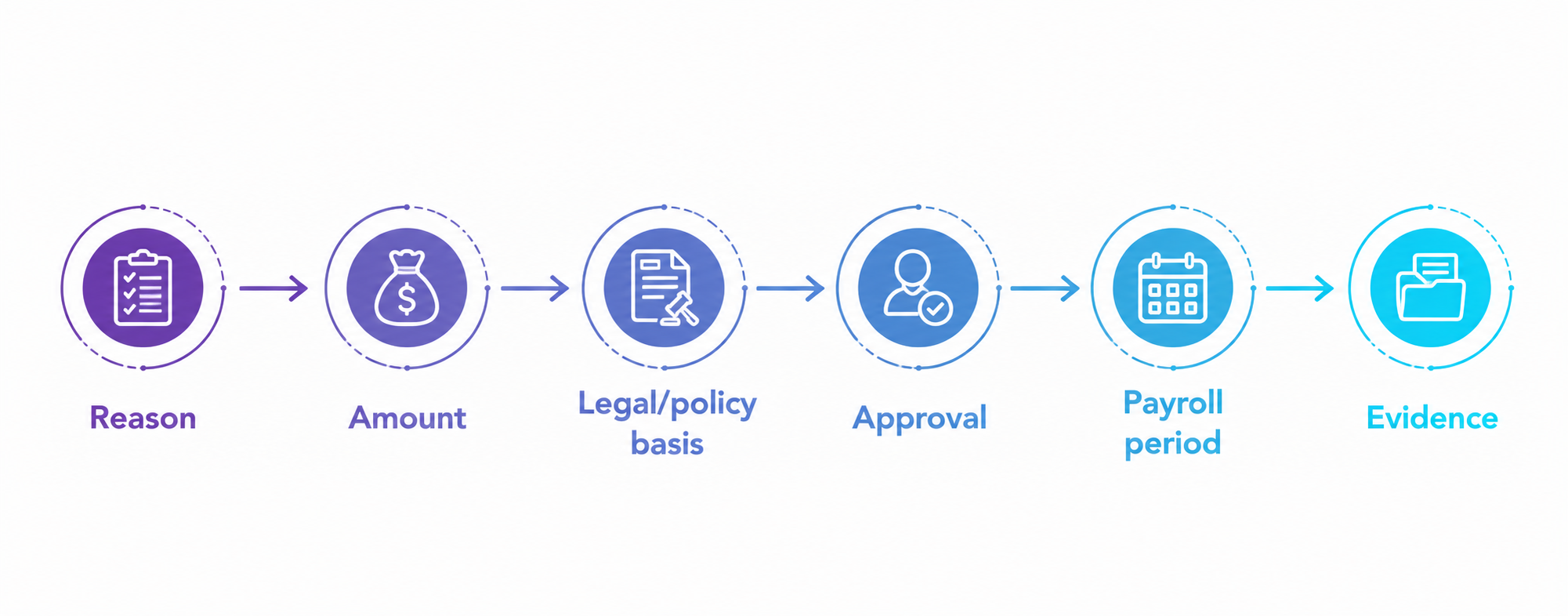
for every non-standard deduction.
Wage Slips and Records
Employers should also review payroll documentation.
The Ministry’s compliance guidance identifies registers relating to:
- Attendance
- Wages
- Overtime
- Fines and deductions
The Handbook also says wage slips must be issued on or before payment of wages and that prescribed records should be maintained.
This makes payroll recordkeeping part of Labour Code compliance.
Code on Wages: Employer Checklist
- Review salary structures against the current definition of wages.
- Validate excluded salary components against the 50% rule.
- Update minimum wages whenever the appropriate government revises rates.
- Define wage periods.
- Ensure monthly wages are paid within applicable timelines.
- Build a two-working-day workflow for exit-related wages.
- Review authorised deduction logic.
- Confirm deductions do not exceed applicable limits.
- Issue compliant wage slips.
- Maintain attendance, wage, overtime and deduction records.
- Review overtime configurations.
- Review bonus applicability.
- Train payroll teams on the new wage definition.
2. Industrial Relations Code, 2020: What Employers Need to Review
The Industrial Relations Code combines provisions relating to:
- Trade unions
- Conditions of employment
- Standing orders
- Industrial disputes
- Grievance handling
- Lay-off
- Retrenchment
- Closure
- Strikes
- Lockouts
The obligations do not apply identically to every employee or establishment.
Businesses should pay close attention to the distinction between an employee and a worker under the relevant Code.
Grievance Redressal Committee
The Ministry’s Employer Handbook states that an industrial establishment employing 20 or more workers must constitute one or more Grievance Redressal Committees.
The committee should have equal representation from employers and workers, subject to the requirements described in the Code.
For growing companies, this should trigger an HR compliance check when worker numbers approach the threshold.
Works Committee
Industrial establishments that employ or have employed 100 or more workers during the preceding 12 months may be required by the appropriate government to constitute a Works Committee.
The committee is intended to promote better relations between employers and workers.
Standing Orders
The Handbook states that Standing Order requirements apply to industrial establishments employing 300 or more workers.
Employers may adopt the relevant Model Standing Orders or follow the prescribed certification process for their own Standing Orders.
Businesses approaching this threshold should not wait until the 300th worker joins before starting compliance planning.
Changes in Service Conditions
Certain changes to service conditions require formal notice.
The Ministry’s Handbook states that when an employer intends to change a condition listed in the relevant schedule, the change can generally take effect only after the specified 21-day notice process.
This can affect matters such as:
- Wages
- Working hours
- Allowances
- Leave
- Shift working
- Worker classification
- Certain disciplinary rules
- Some workforce changes
HR teams should therefore involve labour compliance specialists before making material policy or workforce changes.
Lay-Off, Retrenchment and Closure
The Industrial Relations Code contains different procedures based on establishment type and workforce size.
The Ministry’s Employer Handbook distinguishes requirements for covered industrial establishments with 50–299 workers and those with 300 or more workers.
For certain factories, mines and plantations with 300 or more workers, prior government permission becomes relevant for lay-off, retrenchment or closure.
Because these are high-risk employment actions, businesses should obtain case-specific legal advice before acting.
Industrial Relations Compliance Checklist
- Identify employees who meet the definition of worker.
- Monitor worker-count thresholds.
- Set up a Grievance Redressal Committee where applicable.
- Review Works Committee requirements.
- Review Standing Order applicability.
- Update disciplinary processes.
- Review change-of-service-condition procedures.
- Establish escalation protocols for industrial disputes.
- Review retrenchment and lay-off processes.
- Understand government notice or permission requirements.
- Update strike and lockout response procedures.
- Maintain worker-representation records.
3. Occupational Safety, Health and Working Conditions Code, 2020
The OSHWC Code consolidates several workplace safety and working-condition laws.
It can affect:
- Establishment registration
- Appointment letters
- Health and safety
- Welfare facilities
- Working conditions
- Women working at night
- Contract labour
- Inter-state migrant workers
- Factories
- Mines
- Construction work
- Other covered establishments
The Ministry’s Employer Handbook describes the Code as introducing measures such as single registration, electronic filings and more consolidated licensing.
Establishment Registration
The Ministry’s Handbook states that establishments covered by the relevant provision and employing 10 or more employees must complete registration as prescribed.
For establishments already registered under applicable Central legislation, the framework provides for updating or intimating existing registration details rather than necessarily creating a fresh registration from scratch.
Applicability should always be checked against the relevant Code, Rules and appropriate government.
Appointment Letters
One employer duty highlighted by the Ministry is the issuance of appointment letters to employees.
Employers should review whether their appointment letters accurately cover:
- Employer identity
- Employee identity
- Designation
- Place of work
- Salary or wages
- Employment type
- Joining date
- Working conditions
- Benefits
- Other prescribed information
Appointment letters should also align with payroll and HR master data.
Workplace Safety and Health
Employers must maintain safe working conditions and applicable welfare facilities.
Depending on the establishment, this can include:
- Cleanliness
- Ventilation
- Lighting
- Drinking water
- Toilets
- First aid
- Welfare facilities
- Safety procedures
- Medical examination or health-check requirements
- Safety committees
- Safety officers
The exact requirements vary by establishment type and workforce threshold.
Women Working at Night
The Code permits women to work across establishments and types of work.
Where women work before 6:00 a.m. or after 7:00 p.m., the Ministry’s Employer Handbook states that employers must obtain consent and follow prescribed safety and working-condition requirements.
Businesses operating night shifts should therefore review:
- Written consent
- Transport
- Workplace security
- Shift policies
- Rest and working hours
- State-specific conditions
- Emergency response processes
Contract Labour Compliance
Contract labour is an important risk area.
The Ministry’s Employer Handbook states that the relevant contract-labour provisions apply to establishments in which 50 or more contract workers were employed on any day during the preceding 12 months.
It also states that contractors employing 50 or more contract workers require the applicable licence.
A particularly important point for principal employers is wage responsibility.
If a contractor fails to pay wages within the required period or makes a short payment, the principal employer can become responsible for making the payment to the contract labour.
This means outsourcing manpower does not eliminate every compliance risk.
Inter-State Migrant Workers
The Ministry’s Handbook states that special provisions apply where an establishment employs 10 or more inter-state migrant workers during the relevant period.
It also identifies an annual journey-allowance requirement for covered inter-state migrant workers.
Employers that recruit workers across state borders should therefore maintain accurate worker-origin and location data.
OSHWC Compliance Checklist
- Confirm establishment-registration requirements.
- Update registration details where required.
- Issue compliant appointment letters.
- Review workplace health and safety procedures.
- Review annual health examination requirements.
- Check welfare-facility thresholds.
- Review Safety Committee applicability.
- Review Safety Officer requirements.
- Audit women night-shift policies.
- Identify contract labour counts.
- Validate contractor licences.
- Verify contractor wage compliance.
- Review principal-employer responsibilities.
- Identify inter-state migrant workers.
- Check journey-allowance obligations.
- Maintain accident and safety-reporting procedures.
4. Code on Social Security, 2020: Employer Responsibilities
The Code on Social Security brings together several important employee-benefit frameworks.
These include:
- Employees’ Provident Fund
- Employees’ State Insurance
- Gratuity
- Maternity benefits
- Employee compensation
- Social security for unorganised workers
- Gig and platform workers
- Building and construction worker welfare
This Code has a direct connection to both payroll and HR administration.
EPF Coverage
The Ministry’s Employer Handbook states that the EPF provisions apply to establishments employing 20 or more employees under the Code’s framework.
Employers should review:
- Establishment coverage
- Employee eligibility
- Wage definition
- UAN data
- Employee joining
- Employee exits
- Contribution calculations
- ECR data
- Payment reconciliation
- Employee transfers
- Nomination and KYC records
Payroll data and PF records should reconcile every month.
ESIC Coverage
The Employer Handbook states that ESI provisions apply broadly to establishments employing 10 or more persons, subject to the Code, Schedule and applicable rules. It also describes coverage for certain hazardous or life-threatening activities at lower workforce levels.
Businesses should not assume that employee count alone determines every ESIC obligation.
The establishment, activity, employee wage eligibility and applicable notifications must also be checked.
Gratuity
The Social Security Code retains gratuity as an important employer obligation.
The Ministry’s Handbook states that gratuity is generally payable after at least five years of continuous service in qualifying termination situations.
It also provides specific treatment for fixed-term employees, including gratuity on completion of the required fixed-term service conditions.
The Handbook states that gratuity should be paid within 30 days from the date it becomes payable.
Employers should therefore coordinate exit payroll and gratuity processes instead of treating them as unrelated activities.
Maternity Benefits
The Employer Handbook identifies several maternity-related obligations.
These include:
- Eligibility based on applicable service conditions
- Maternity benefit
- Protection against dismissal for lawful maternity absence
- Nursing breaks
- Crèche requirements for qualifying establishments
It states that employers with 50 or more employees must provide or access an applicable crèche facility under the framework.
HR policies should match actual operating practices.
Gig and Platform Workers
The Social Security Code formally recognises gig and platform workers within India’s social-security framework.
The Ministry’s Handbook states that covered aggregators can be required to contribute between 1% and 2% of annual turnover, subject to a statutory cap linked to amounts paid or payable to gig and platform workers.
This is particularly relevant to:
- Delivery platforms
- Mobility companies
- Digital marketplaces
- Platform businesses
- On-demand service providers
Such organisations should assess their aggregator status carefully.
Social Security Compliance Checklist
- Confirm EPF applicability.
- Confirm ESIC applicability.
- Validate employee wage and coverage data.
- Reconcile PF and payroll records.
- Reconcile ESIC and payroll records.
- Review gratuity policy.
- Identify fixed-term employees.
- Update gratuity workflows.
- Review maternity-benefit policy.
- Review crèche applicability.
- Review employee-compensation processes.
- Identify gig/platform-worker obligations where relevant.
- Maintain employee and social-security records.
- Build statutory deadlines into the compliance calendar.
Complete Labour Code Compliance Checklist for Employers
The Ministry’s official Employer Handbook divides compliance actions into foundational, monthly, periodic and event-based categories.
Employers can use the following expanded checklist.
A. Foundational Compliance
- Identify all establishments.
- Determine the appropriate government.
- Map applicable Central and State rules.
- Complete required registrations.
- Obtain applicable licences.
- Update existing registrations.
- Review employee and worker classifications.
- Review salary structures.
- Review the statutory definition of wages.
- Display mandatory notices.
- Establish wage periods.
- Maintain required registers.
- Issue appointment letters.
- Establish workplace safety processes.
- Complete EPF registration where applicable.
- Complete ESIC registration where applicable.
- Establish committees where workforce thresholds require them.
- Document compliance ownership.
B. Monthly Compliance
- Close attendance.
- Validate overtime.
- Process wages within applicable timelines.
- Issue wage slips.
- Update wage registers.
- Validate PF deductions and contributions.
- Validate ESIC deductions and contributions.
- Complete statutory deposits.
- Reconcile payroll and statutory records.
- Update new joiners.
- Update employee exits.
- Review contractor wages.
- Track compliance exceptions.
- Maintain evidence of completion.
C. Periodic and Annual Compliance
- File applicable unified or statutory returns.
- Check revised minimum-wage notifications.
- Review licences.
- Renew licences where required.
- Conduct applicable safety audits.
- Complete prescribed health examinations.
- Review salary structures against the wage definition.
- Review Standing Orders.
- Review contractor compliance.
- Review gratuity nominations.
- Conduct a PF/ESIC reconciliation.
- Review maternity and crèche compliance.
- Update State compliance matrices.
D. Event-Based Compliance
Events can create deadlines that do not fit the monthly calendar.
Examples include:
- New employee joining
- Employee resignation
- Termination
- Retrenchment
- Establishment closure
- Workplace accident
- Dangerous occurrence
- Occupational disease
- Employee maternity
- Contractor appointment
- New work location
- New State operation
- Change in service conditions
- Strike
- Lockout
- Crossing a statutory workforce threshold
The official Employer Handbook specifically identifies actions such as appointment letters for new recruits, accident reporting and settling exit-related dues.
Labour Code Compliance Matrix by Business Function
Labour Code compliance should not sit with one employee in HR.
| Business Function | Core Labour Code Responsibilities |
| HR | Appointment letters, employee classification, policies, exits, grievances, maternity |
| Payroll | Wage definition, salary processing, PF, ESIC, deductions, wage slips |
| Finance | Statutory payments, provisioning, gratuity, contractor payments, reconciliation |
| Compliance / Legal | Applicability, registrations, returns, notices, rules, inspections |
| Operations | Working conditions, shift schedules, migrant workers, contractor supervision |
| EHS / Safety | Safety procedures, health examinations, accidents, workplace standards |
| Procurement | Contractor due diligence and contractual compliance clauses |
| Management | Governance, risk oversight and major workforce decisions |
Every organisation should identify a primary owner and backup owner for each requirement.
Suggested 30-60-90 Day Labour Code Implementation Roadmap
Businesses that have not completed a structured Labour Code review can use the following phased approach.
First 30 Days: Identify Risk
Create an inventory of:
- Establishments
- Locations
- Employees
- Workers
- Contractors
- Contract workers
- Migrant workers
- Salary structures
- Registrations
- Licences
- Committees
- Payroll rules
- HR policies
Then compare the current environment with the applicable Labour Code requirements.
Output:
Labour Code Gap Register
Each gap should have:
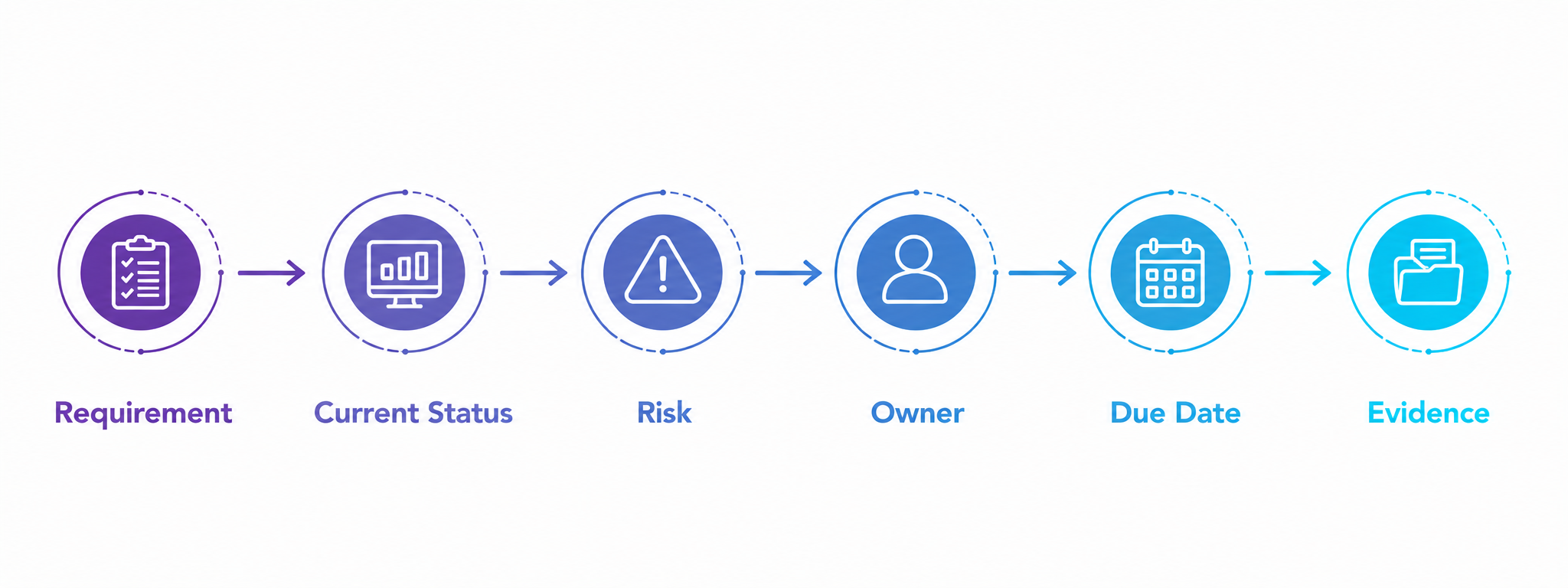
Days 31–60: Fix Policies and Systems
Prioritise high-impact operational areas.
These may include:
- Wage-definition configuration
- Salary structure
- Payroll rules
- Exit settlement
- Appointment letters
- Standing Orders
- Grievance processes
- Contractor agreements
- Safety policies
- Employee classifications
- Registers
- Compliance calendar
Do not update policies without also updating the systems and teams that execute them.
Days 61–90: Test and Audit
Run a controlled compliance audit.
Sample:
- Employee salary structures
- Wage calculations
- Exit cases
- PF records
- ESIC records
- Appointment letters
- Contractor records
- Worker classifications
- Attendance
- Overtime
- Wage slips
- Safety documentation
Record exceptions and close them through a documented remediation plan.
10 Common Labour Code Compliance Mistakes Employers Should Avoid
1. Assuming Basic Salary Must Simply Be 50% of CTC
The wage-definition mechanism is more nuanced.
Better approach: Classify every remuneration component before applying the 50% test.
2. Treating the New Labour Codes as Only an HR Project
Payroll, finance, compliance and operations are also affected.
Better approach: Create a cross-functional implementation team.
3. Ignoring State-Level Requirements
India’s labour framework still involves the appropriate government and State-specific requirements.
Better approach: Maintain a State-wise compliance matrix.
4. Using One Compliance Checklist for Every Establishment
A factory, corporate office, mine and construction establishment can have different requirements.
Better approach: Conduct establishment-level applicability analysis.
5. Ignoring Employee vs Worker Classification
Some Industrial Relations provisions depend specifically on the definition of worker.
Better approach: Build a defensible classification matrix.
6. Updating Policy Without Updating Payroll
A new salary policy has little value if payroll continues to use the old configuration.
Better approach: Connect every policy change to system testing.
7. Treating Contractors as the Contractor’s Problem
Principal employers retain important responsibilities.
Better approach: Audit contractor wages, licences and statutory records.
8. Missing Workforce Thresholds
Hiring one additional person can sometimes trigger a new requirement.
Better approach: Configure compliance alerts at relevant employee and worker thresholds.
9. Keeping Poor Evidence
Completing an obligation is only one part of compliance.
Employers also need evidence that it was completed.
Better approach: Maintain digital compliance records and approval trails.
10. Waiting for an Inspection Before Conducting an Audit
By the time a notice arrives, remediation becomes harder.
Better approach: Conduct periodic internal compliance audits.
Special Challenge for Multi-State Employers
Multi-state businesses face additional complexity.
A central HR team may manage one workforce, but compliance can still vary across locations.
Employers should maintain a location matrix covering:
|
Area |
What to Track |
|
Establishment |
Legal entity and location |
|
Appropriate Government |
Central or State |
|
Minimum Wages |
Applicable category and rate |
|
State Rules |
Current notified requirements |
|
Professional Tax |
State applicability |
|
Labour Welfare Fund |
State applicability |
|
Shops & Establishments |
Registration and State requirements |
|
Working Hours |
State/location requirements |
|
Leave |
Applicable employment framework |
|
Notices & Displays |
Required local formats/languages |
|
Labour Codes |
Central/State rules applicable to establishment |
This is especially important for employers expanding into new States.
A new office is not only a facilities project.
It can create a new compliance footprint.
How Can Employers Prepare for a Labour Inspection?
The best time to prepare for an inspection is before receiving notice of one.
Employers should maintain a compliance evidence repository containing:
- Registration certificates
- Licences
- Wage registers
- Attendance records
- Overtime records
- Wage slips
- PF records
- ESIC records
- Gratuity records
- Appointment letters
- Standing Orders where applicable
- Committee records
- Contractor documents
- Employee policies
- Safety records
- Accident records
- Government correspondence
- Previous inspection observations
- Corrective action records
A compliance audit should answer three questions:
Is the requirement applicable?
Have we complied?
Can we prove it?
The third question is frequently overlooked.
Labour Code Compliance Risk Matrix
Employers can prioritise remediation using a simple framework.
|
Risk Level |
Example |
Recommended Response |
|
Critical |
Unpaid wages, major social-security default, serious safety failure |
Immediate escalation |
|
High |
Incorrect wage structure, missing statutory registration, contractor wage default |
Remediate urgently |
|
Medium |
Incomplete records, outdated policy, missing evidence |
Correct within defined timeline |
|
Low |
Formatting or administrative improvement |
Include in regular compliance cycle |
This makes a large compliance project easier to manage.
How Do the New Labour Codes Affect Payroll?
Payroll is one of the functions most directly affected.
Employers should review:
- Definition of wages
- Salary structures
- Minimum wages
- Overtime
- Wage periods
- Payment timelines
- Authorised deductions
- Exit-related wages
- PF
- ESIC
- Gratuity
- Employee classifications
- Wage slips
- Payroll records
Businesses should therefore avoid reviewing Labour Code compliance without involving the payroll team.
A separate detailed guide on how the new Labour Codes affect payroll, CTC, PF, gratuity and HR compliance should form the next MOFU layer under this pillar.
Do the Labour Codes Remove the Need for PF and ESIC Compliance?
No.
PF and ESIC remain important parts of employer social-security compliance.
The Code on Social Security brings several social-security laws into one broader framework, but employers still need to determine coverage, maintain employee information, calculate applicable contributions and complete relevant compliance activities.
Employers should therefore maintain a separate PF and ESIC compliance process connected to payroll.
How Often Should Employers Review Labour Code Compliance?
Compliance should not be reviewed only once.
A practical schedule is:
Monthly: payroll and social-security compliance
Quarterly: exceptions, contractor compliance and open issues
Half-Yearly: establishment and policy review
Annually: complete Labour Code compliance audit
Event-Based: whenever there is a significant workforce, location, regulatory or business change
Regulatory notifications should also trigger an immediate review where necessary.
When Should a Business Consider a Labour Law Advisor?
An organisation may need specialist labour-law support when:
- It operates in multiple States.
- It has several establishments.
- It employs contract labour.
- It uses inter-state migrant workers.
- It is approaching statutory workforce thresholds.
- Its salary structures are complex.
- It has received a labour notice.
- It has PF or ESIC disputes.
- It is restructuring its workforce.
- It needs to update Standing Orders.
- It is opening or closing establishments.
- It lacks an internal statutory-compliance team.
- It needs a Labour Code compliance audit.
The objective is not to outsource accountability.
The employer remains responsible for its compliance environment.
The purpose of specialist support is to create a more structured way to identify obligations, manage deadlines, maintain evidence and respond to regulatory changes.
How Vauras Can Help Employers Navigate the New Labour Codes
Labour Code implementation can involve several connected functions.
Vauras can support businesses in areas related to labour-law compliance, payroll, PF and ESIC, statutory compliance and employer documentation.
A practical engagement can begin with a New Labour Codes readiness assessment.
The review can examine areas such as:
- Establishment applicability
- Wage structures
- Payroll practices
- PF and ESIC
- HR policies
- Appointment documentation
- Worker classification
- Contractor compliance
- Registers
- Statutory calendars
- Compliance gaps
The objective should be to create a prioritised action plan rather than simply producing another checklist.
Is Your Business Ready for the Labour Codes in 2026?
Identify gaps before they turn into payroll corrections, employee disputes or regulatory issues.
Explore: Vauras Labour Law Advisor Services
Conclusion
India’s new Labour Codes represent far more than a change in legal terminology.
They affect how employers structure wages, process payroll, manage PF and ESIC, handle employee exits, maintain industrial relations, engage contractors and protect workers at the workplace.
For employers, the best response is not to wait for a compliance notice.
Start with four questions:
Which requirements apply to us?
Are our current HR and payroll processes aligned?
Who owns each compliance activity?
Can we prove that the activity was completed?
Businesses that can answer those questions clearly will be better prepared to manage the Labour Code framework as their workforce grows.
In 2026, labour-law compliance should therefore be treated as an ongoing operating discipline rather than an annual documentation exercise.
Frequently Asked Questions About the New Labour Codes 2026
1. What are the four new Labour Codes in India?
India’s four Labour Codes are the Code on Wages, 2019; Industrial Relations Code, 2020; Code on Social Security, 2020; and Occupational Safety, Health and Working Conditions Code, 2020. Together, they consolidate 29 central labour laws.
2. When did India's new Labour Codes come into effect?
The Government made the four Labour Codes effective from 21 November 2025.
3. Were the Central Labour Code Rules notified in 2026?
Yes. Central Rules under the four Labour Codes were notified in May 2026. Employers should still determine whether the Central or State Government is the appropriate government for their establishment and check the rules applicable to them.
4. Does the new Wage Code require basic salary to be exactly 50% of CTC?
No. That statement is too simplistic. The Labour Code framework defines wages and provides that when specified excluded components exceed 50% of remuneration, the excess is added back to wages. Employers need to evaluate individual salary components rather than merely fixing basic salary at exactly 50% of CTC.
5. How quickly must monthly wages be paid?
The Ministry’s Employer Compliance Handbook states that monthly wages should generally be paid before the expiry of the seventh day of the succeeding month.
6. How quickly must wages be settled after an employee leaves?
The Code on Wages framework generally requires due wages following resignation, dismissal or termination to be paid within two working days.
7. How do the Labour Codes affect PF and ESIC?
PF and ESIC now sit within the broader Code on Social Security framework. Employers still need to determine establishment and employee applicability, process contributions, maintain records and complete required filings and payments.
8. Is a Grievance Redressal Committee mandatory?
The Industrial Relations framework requires one or more Grievance Redressal Committees in covered industrial establishments employing 20 or more workers. Applicability should be assessed against the Code and relevant rules.
9. Do employers remain responsible for contract workers?
Principal employers retain important responsibilities. The Ministry’s Employer Handbook states that if a contractor fails to pay contract labour on time or makes a short payment, the principal employer can become liable to make the payment.
10. What should employers do first to comply with the New Labour Codes?
Start with an applicability and gap assessment. Identify establishments, workforce categories, salary structures, registrations, contractors and current HR/payroll processes. Then map those items against the applicable Labour Codes and Central or State rules.