
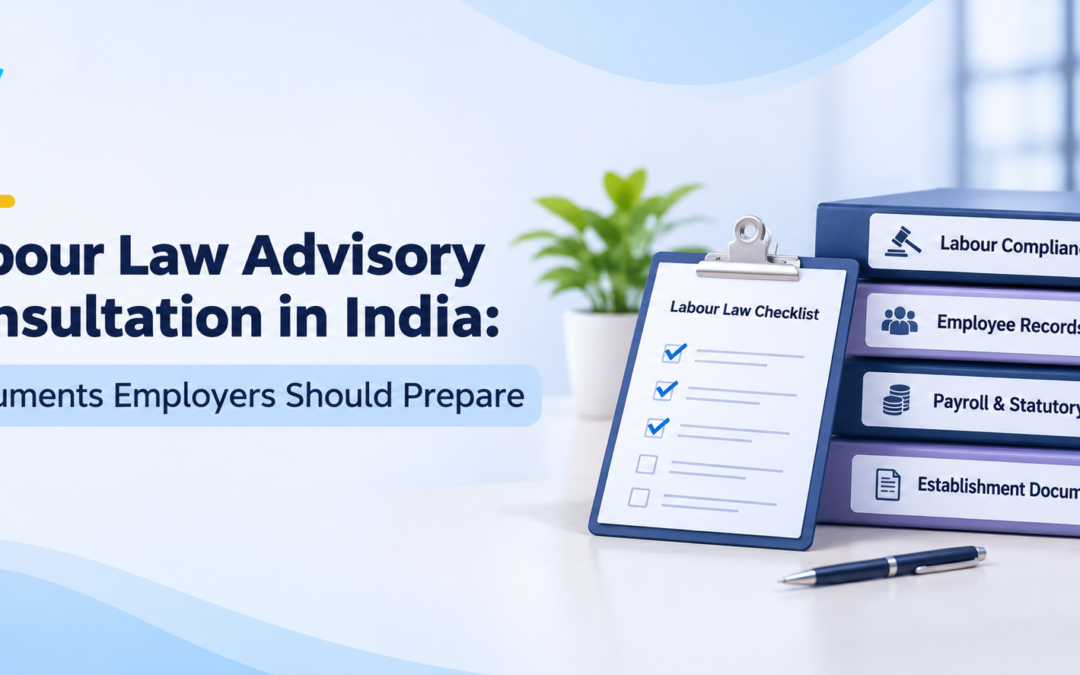
A labour law advisor in India can start an employer consultation with five sets of records: your establishment details, workforce headcount, recent payroll and attendance records, applicable statutory filings, and any contractor records or notices relevant to the issue. For a first call, prepare a one-page summary by worksite and one recent closed payroll month. Add the affected months if you are investigating a mismatch or responding to a notice.
A labour law advisory consultation helps an employer work out which obligations apply, where records are missing and what to address first. This checklist is for SME owners, HR teams and finance managers, including those at factories and schools. Use it to prepare for the meeting. The advisor should confirm the records and rules that apply to each site and period.
What documents should employers bring to a labour law advisory consultation?
Start with the records that answer three questions: where do people work, who employs them and what was paid or filed for the period under review?
- Business and worksite details. List the legal entity name, site addresses, state, type of establishment and approximate headcount by site. Keep relevant registration certificates and licences ready. If two sites operate under different entities, show that in your summary.
- Workforce records. Bring a headcount summary that distinguishes direct employees from workers supplied by contractors. Keep a redacted employee master and sample appointment letters or employment contracts ready. Include joining and exit dates when they affect the issue.
- Payroll and attendance. Export the salary register, sample payslips, attendance, leave and overtime for the same closed month. Keep the summary of payroll payments available if the advisor needs to reconcile amounts. Use the same month across all reports so differences are easier to explain.
- Statutory filings and payments. Where applicable, gather Employees’ Provident Fund (EPF) and Employees’ State Insurance (ESI) registration details, filed records, challans and payment confirmations. For EPF, keep the Electronic Challan-cum-Return (ECR) for the period under review. Flag any missing acknowledgements and include state-specific records where relevant.
- Contractors and open issues. Bring relevant vendor agreements, deployment lists, attendance and the contractor’s contribution evidence where applicable. Include notices, inspection observations, earlier replies and submission receipts if they relate to the consultation.
What changes for a factory, school or multi-site business?
- Factory. Keep relevant factory licences, shift and overtime records, contractor rosters, and any safety or inspection records that relate to the review.
- School. Separate teaching and support staff in the summary. Identify outsourced roles such as security or housekeeping, if used, and list the vendors providing them.
- Multi-site employer. Create one row per site with its state, entity, activity, headcount, vendor list and open issues. Confirm which registrations and records sit at site level.
India’s four Labour Codes took effect on 21 November 2025. Ask the advisor to identify the applicable Central or state rules, notifications and forms for the worksite and the dates under review. The Ministry’s Labour Codes resources and Vauras’s broader employer readiness guide are useful starting points. Labour Codes commencement · Ministry of Labour and Employment · Labour Codes compliance checklist for employers
How do you organise the records before the first call?
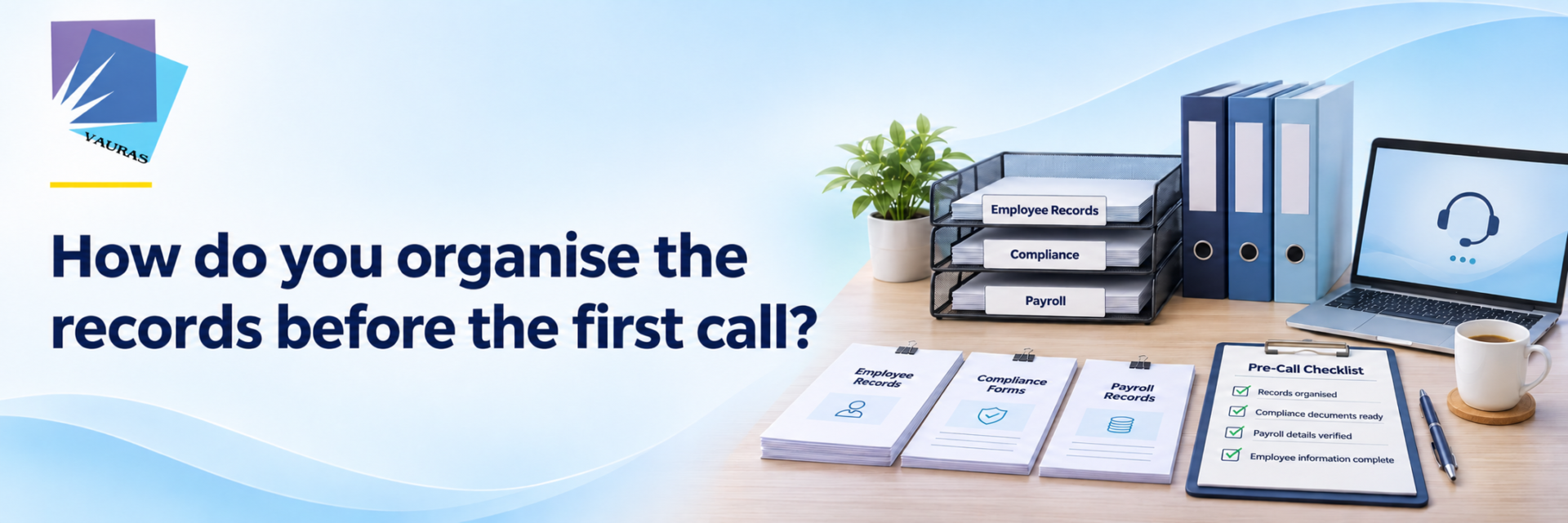
Create a short summary and a folder for the records you may need to share. In the summary, record the site, period, document owner and status for each issue. Mark each item as available, missing or awaiting confirmation. If a notice is involved, put its response deadline at the top and include a copy and any prior correspondence.
Worked example for a small factory
A factory in West Bengal has 48 direct employees and 12 workers supplied by a housekeeping vendor. HR wants to check whether the contractor’s ESI records can be matched to the people who worked on-site that month.
- HR prepares the site summary, vendor agreement and redacted deployment roster for the month.
- Finance locates the vendor’s invoice and payment evidence. The vendor has sent a challan, but HR still needs the relevant worker-level contribution record to check it against the roster.
- HR records the contribution record as pending, names the vendor contact responsible for sending it and asks the advisor which workers and periods should be checked.
That gives the advisor a specific question to answer and shows the employer which evidence to pursue. If you use labour law compliance software, export the relevant checklist or exception report and note which entries still need someone to check the underlying records.
How much employee data should you share upfront?
Start with headcounts and redacted samples. Remove personal identifiers, bank details and home addresses from initial samples. Keep original records intact and use a secure, access-controlled channel if the advisor needs identifiable files. Agree who can access them and when the copies will be deleted.
What should you ask a labour law advisor in India before you engage them?
Ask for a written scope that lists the sites, worker groups and periods covered. If you searched for a “labour law consultant near me”, use the discussion to check whether the provider covers your state, understands your establishment type and can provide on-site support if your case requires it.
- Applicability. Which rules, registrations and filings will you check for each site, and what information do you need to make that assessment?
- Deliverables. Will we receive a written list of gaps, priorities, owners and due dates? How will you flag an issue that needs a separate legal opinion?
- Responsibilities. Who prepares, approves and submits each return? Who keeps the acknowledgement and checks that payment and filing records agree?
- Scope and fees. Which activities are part of a one-time review? Which registrations, recurring filings, inspection support or notice responses need a separate scope?
Official payroll releases show how different these records can be. For April 2025, the Employees’ Provident Fund Organisation (EPFO) reported a provisional net addition of 19.14 lakh members in India. For June 2025, provisional Employees’ State Insurance Corporation (ESIC) data recorded 34,762 newly registered establishments under the ESI Scheme in India. The figures cover different periods and populations. For your consultation, keep your own establishment registrations and worker-level records easy to retrieve. EPFO April 2025 payroll release · ESIC June 2025 payroll release
How can Vauras help with an employer review?
Vauras offers labour law advisory services and support with agreed registrations, returns, registers and inspection preparation. If you need recurring filing and reconciliation support, review Vauras’s statutory compliance management services. If the issue starts with payroll inputs or monthly processing, see its payroll management services.
Conclusion
Prepare one site summary, one closed month of payroll and attendance, the relevant filing evidence and a list of open issues. Record missing items and deadlines so the advisor can prioritise the review. To request an employer consultation, share your location, establishment type, employee and contractor counts, the service or issue you need help with, your timeline and the best decision-maker contact. Speak with a Vauras labour law advisor
Frequently Asked Questions
How many months of payroll records should I bring?
Start with one recent closed month for a routine first call. If the issue concerns arrears, a mismatch or a notice, flag the entire affected period and ask the advisor which additional months to provide.
Can I book a consultation if some records are missing?
Yes. List what is missing, who holds it and when you expect to receive it. For an active notice, share the notice and due date as early as possible.
Do contractors’ employees go in the same headcount as direct employees?
Show the counts separately in your first-call summary. Break down contractor headcount by vendor and site so the advisor can check how the applicable rules treat each group.
What if the challan amount differs from the payroll register?
Keep both records, along with the filing acknowledgement, relevant contribution detail and any correction history. Tell the advisor which month and which group of workers are affected so they can trace the difference.
Can the same checklist be used for every branch?
Use the same preparation template and complete it separately for each worksite. State, establishment activity, headcount and the period under review can change which registrations, records and filings need checking.